The pitfalls of using LLMs for document extraction in private markets

Private markets and document extraction
If private markets have a nemesis, it’s the PDF.
It’s completely understandable that funds are still using PDFs – as well as gathering and sharing data in the form of scanned letters, spreadsheets, and slide decks. Old processes are hard to break.
However, the consequence is reams of unstructured data that needs to be extracted, rationalized, and re-delivered into systems to ensure that numbers carry across. In today’s data-driven world, where funds are trying to realize the benefits of AI, they’re looking for ways to liberate their data from static documents to derive value from them.
This process – known as “document extraction” – has been historically manual. Funds typically hire three or four people to extract, check, and cross-check numbers from documents that range that from cap calls and quarterly reports to LPAs and sub docs.
It’s a cumbersome, thankless, and high-risk job, typically reliant on analysts logging into GP portals, physically keying numbers from PDFs into Excel, manual spot-checks before sign-off, and quirks and definitions living in people's heads.
Enter AI.
AI and document extraction
Private markets have been quick to identify an opportunity to create an automated solution to a problem that has plagued them for decades.
According to a 2025 survey from State Street, 83% of funds said that they were planning use cases for GenAI and large language models (LLMS) to turn unstructured information in their private market operations into analyzable data.
There is nothing intrinsically wrong with using AI for document extraction. In fact, that is exactly what we are doing at Lantern (the clue is in our URL!). However, there is a big difference between a home-built LLM and a product using AI that is purpose-built for private markets, trained on real documents across thousands of formats, and with a dedicated product and support team behind it.
While there is an understandable temptation for funds to try and build something themselves, there are number of hidden pitfalls that companies should consider before they try to undertake document extraction with LLMs.
Hidden pitfall #1: When AI gets the data wrong
Let’s start with the most important and high-risk hidden cost: AI hallucination.
It’s a known and well-documented issue with LLMs that they are designed to produce an answer no matter what. This has clear risks when it comes to private markets data, where figures are complicated, represented at varying levels of accuracy across the document, spread across several sources, and often presented in different formats.
It’s not just a case of whether the LLM will completely make up a number – although that is possible – but what the LLM does if there are conflicting data points from different sources. LLMs are not designed to present doubt so are liable to make a decision without transparency on how a number was reached.
This risk may explain why – in the State Street report - of the 83% of funds that said they “planned” to use LLMs for document extraction, and the 33% that said they “are using it”, only 8% had actually implemented those solutions in production. Production needs entity resolution, document tracking, confidence scoring, verification and audit trails. This is the last 30% where most builds stall.
Firms considering using LLMs for document extraction need to ask themselves:
- How will you know if the data the LLM presents is wrong?
- If it’s wrong, what are you going to do?
- How are you going to stop the LLM from doing it again?
Hidden pitfall #2: Manual checks
If your answer to the questions in the section above is “we’ll get people to check it”, then really you’re back at square one. The cost you’ve ostensibly saved in software is actually just been passed onto salaries, the inevitable question of 'how accurate is it?’ is largely irrelevant if you cannot answer around how you will get it to 100%
While LLMs might now undertake some of the heavy lifting when it’s working well, the inability to trust the data means that a human needs to check all the figures. That’s salaried employees double checking the math they could have done themselves and – if the model has produced a false result – potentially spending additional time trying to work out what went wrong.
This headcount cost scales with every new fund. It also introduces a new element of risk, as the process inevitably ends up living in employees’ heads, creating serious issues for the business when they leave.
Hidden pitfall #3: The dreaded audit
Let’s imagine that you’ve managed to solve challenges one and two: you have a perfectly working LLM executing document extraction so well that you don’t need any human checkers. What do you do when the auditor shows up and asks how you got to the final number?
A year on, without an audit trail, numbers are going to be extremely difficult to prove and suddenly you’re in an all-out fire drill. This is assuming that everything was correct to begin with.
In reality, there is plenty of opportunity for error to creep in. For example, missing documents surfacing late, long after the close of reporting. Would an LLM pick it up? The downstream impact could be serious where operational mistakes can translate into material losses and risks - especially in today’s volatile markets.
An AI document extraction tool built for the private markets
Document extraction is clearly ripe for disruption. In the world of AI, it makes no sense for the industry to spend billions of dollars each year on manual extraction. It’s just a matter of finding the right tool to do it.
We’ve used the latest advancements in AI and machine learning to understand fund documents and data, irrespective of layout. Our algorithms have been trained on more than half a million data points across private market documents and our process has been informed by experts with years of domain expertise as LPs, GPs, and Fund Admins.
The result is Freyda document extraction:
- Effortless retrieval of documents from any portal – With the ability to connect with cloud storage, SFTP, email or API.
- Automatic identification of missing documents – with Freyda flagging expected sources that are missing or late.
- Document verification at source – Every figure checked for internal consistency based on a thorough understanding of the document and domain.
- Customizable workflows – With packaged schemas or customized fields available and automation that improves as you correct it.
- Exported in the format you need – With the ability to deliver by API, file export, Excel report, accounting systems, or AI agent.
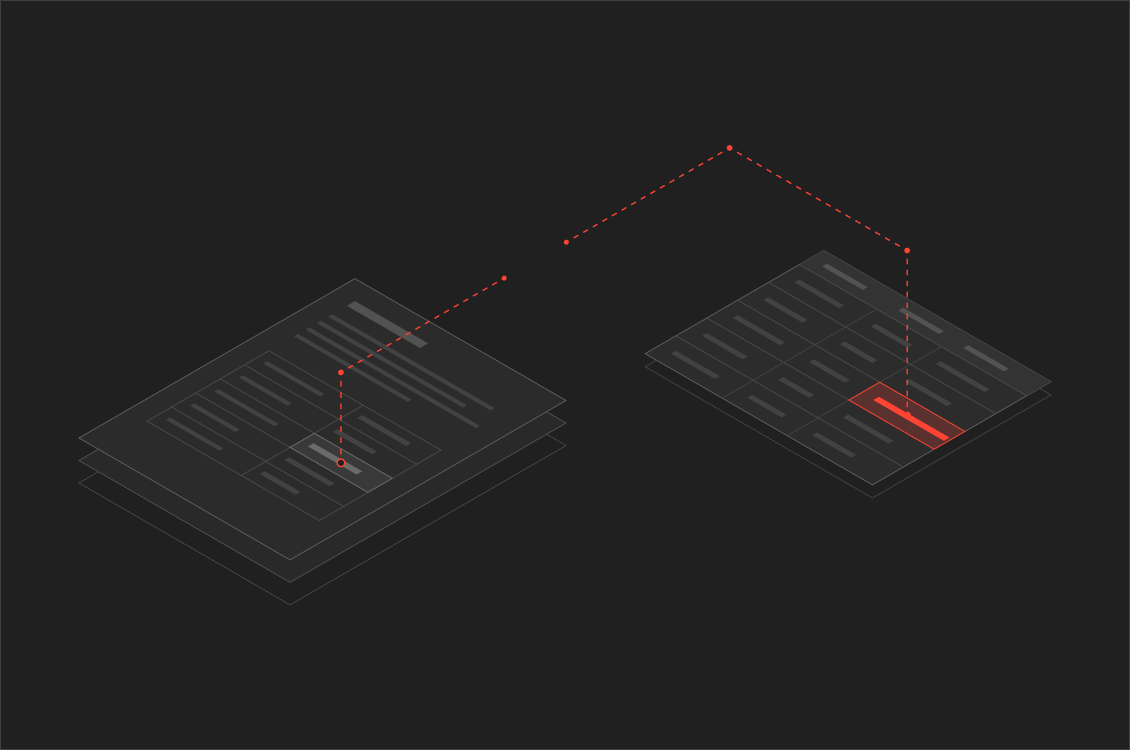
- Fully auditable – With the ability to trace any data back to its original document source and a full audit history.
Visit our Freyda page to find out more.